

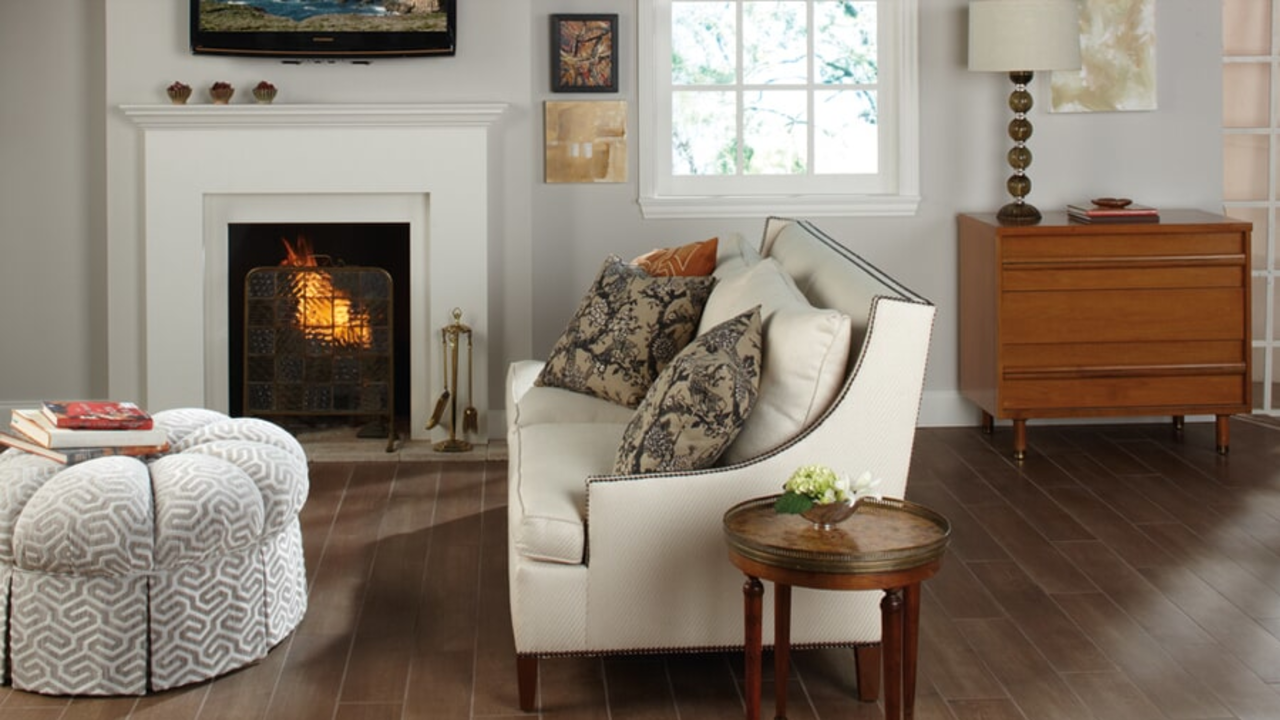
Wood-look tile offers the warmth and character of wood through the structure and surface performance of tile. For Harker Heights homeowners, it can be an appealing choice in kitchens, bathrooms, entryways, living areas, and other rooms where easy maintenance and moisture tolerance are important.
Current wood-look tile trends are moving toward realistic grain, natural variation, comfortable neutral colors, and layouts that feel less repetitive. The objective is no longer to make every plank identical. Instead, the most convincing designs include subtle differences that create the layered appearance associated with natural wood.
Natural Oak Colors Remain a Versatile Choice
Light and medium oak-inspired shades continue to work well because they complement a wide range of interiors. Soft beige, honey, sand, and natural brown tones can make a room feel inviting without becoming visually heavy.
These colors pair easily with white or cream cabinetry, warm gray walls, stone-inspired countertops, and black or brass accents. They also provide flexibility when homeowners update furniture or paint colors later.
In open-concept Harker Heights homes, a natural wood tone can help connect the kitchen, dining area, and living room. Choosing a tile with moderate color variation adds interest while maintaining continuity across the larger space.
Longer Planks Create an Expansive Appearance
Long, rectangular tile planks can visually extend a room. They are often used in open living spaces and long hallways because their shape encourages the eye to travel through the space.
Plank dimensions should still suit the room. An extremely long tile may be difficult to balance in a small bathroom with several corners and fixtures, while a shorter plank may create too many grout lines in a large living room. The best selection considers both the scale of the room and the intended pattern.
Subfloor preparation is especially important with long tile. A stable, properly prepared surface helps the installer achieve an even result and manage transitions between rooms.
Matte Texture Supports a Realistic Wood Effect
A glossy surface can make wood-look tile feel less natural. Matte and low-sheen finishes generally allow printed grain and texture to take center stage. Some products include textured details that follow the visual grain, helping the surface resemble sawn or brushed wood.
Texture should be selected for the intended room. A bathroom floor may benefit from a surface with appropriate slip-resistance characteristics, while a living room may prioritize comfortable cleaning and a refined appearance. Always review the product’s technical rating to confirm that it is approved for the planned application.
Warmer Tones Are Returning
Cool gray wood visuals were once dominant, but many homeowners are now choosing warmer neutrals. Greige, taupe, beige, honey, and muted brown create a softer atmosphere and coordinate well with natural stone patterns and warm cabinet finishes.
This shift does not mean gray has disappeared. Balanced gray-brown tile can still work beautifully in contemporary homes, especially when it avoids an overly blue or cold undertone.
Warm wood-look tile can also soften rooms with black fixtures, stainless steel appliances, or crisp white surfaces. The result feels current without depending on a short-lived color trend.
Layout Patterns Add Personality
A straight plank layout is simple, timeless, and effective in most rooms. Staggered installations create a familiar floorboard effect, although the offset should follow the tile manufacturer’s recommendations.
Herringbone patterns can give an entryway, bathroom, or kitchen a more customized appearance. They use the direction of the planks to create movement and can turn the floor into a focal point. Because herringbone layouts involve more cuts and detailed alignment, homeowners should plan for additional material and labor.
Some designs combine a simple field layout with a patterned section in a smaller area. This can define an entry or create a subtle transition without using the more intricate pattern throughout the home.
Grout Color Makes a Noticeable Difference
Grout is part of the design, even when the intention is to make it nearly disappear. A grout color close to the dominant tile shade creates a more continuous wood-floor effect. A contrasting grout color emphasizes each plank and produces a more graphic result.
For a realistic appearance, many homeowners choose a shade that blends with the darker or middle tones in the tile rather than matching only its lightest area. Looking at the tile and grout samples together helps prevent surprises during installation.
Grout performance and maintenance should also be considered. The selected product needs to be appropriate for the application, joint size, and expected level of use.
Use Wood-Look Tile Beyond the Main Floor
Wood-inspired tile can provide visual continuity in places where homeowners may hesitate to install natural wood. It can be used on bathroom floors, shower walls when the tile is approved for that application, fireplace surrounds, or feature walls.
A vertical wood-look installation can bring height and warmth to a bathroom. Around a fireplace, it can introduce texture without adding another unrelated pattern. The key is restraint. When wood-look tile is used as both a floor and a feature surface, careful color coordination prevents the room from feeling overloaded.
Compare Samples Before Making a Decision
Wood-look tile can vary significantly from piece to piece. Review several tiles from the same collection rather than judging the design from one sample. This reveals the true range of grain patterns and colors.
Surface Source Design Center offers tile and other flooring categories as part of its Central Texas selection. Its Belton showroom also brings flooring, countertops, cabinetry, and remodeling guidance together, helping homeowners coordinate the full room rather than choosing each finish separately.
Bring Lasting Wood Style to Your Harker Heights Home
The best wood-look tile combines a convincing grain pattern, balanced color variation, an appropriate surface finish, and a layout suited to the room. Natural oak tones, longer planks, warm neutrals, and carefully selected grout can create a welcoming foundation for a Harker Heights home.
Ready to explore wood-look tile for your Harker Heights home?


